


by Phil Hanford, on March 16, 2026 at 8:40 AM
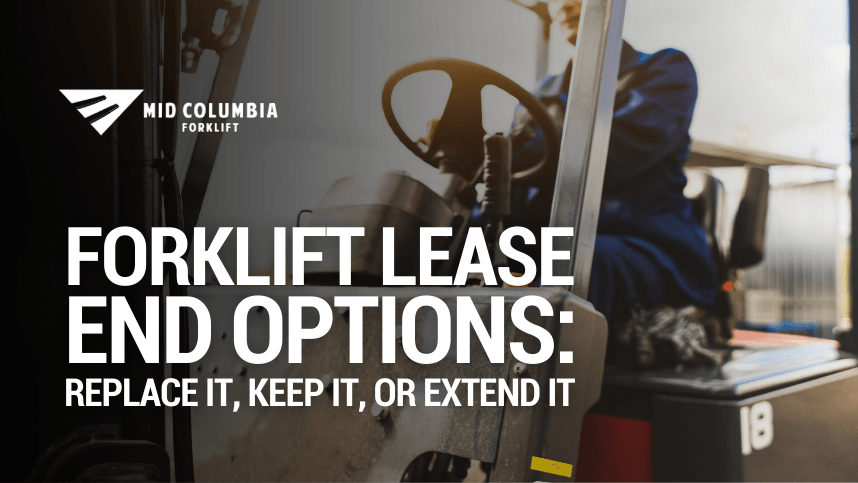
Nothing ratchets up the pressure like a ticking clock.
As you near the end of your forklift lease, you start to hear that ticking and wonder, "What should I do?" In the moment, it feels like there are no obvious answers because, ultimately, there is no one right move. Every situation is different. Every variable unique. And as the sand runs out of the hourglass, everything feels more and more opaque. It's enough to make you reach for your magic 8-ball.
Yet, there are really only three paths ahead.
Better yet, you don't need a divining rod to figure out which of these tried and true options is best for you. In the end, it's all a question of hours, environment, and change. With only those three easy-to-manage variables, you can figure out what lease-end option is right for you.
Read on to learn what your three forklift lease options are and how to choose between them.
The Three Forklift Lease End Moves
Most lease-end decisions fall into one of these three paths:
- Replace it. Replace your current forklift with a new one.
- Keep it. Keep your current forklift by buying it outright.
- Extend it. Extend your lease to push back the decision.
Let’s walk through each one.
Option 1: Replace It
Sometimes, your best bet is to replace your current forklift with a newer model.
This might be your best move when:
- Hours are high (approaching the maximum allowed by lease terms)
- Downtime is starting to creep up
- The application has changed (new racking, new product, new dock layout, etc.)
- You need newer safety features or better ergonomics
- Your team is fighting the forklift instead of using it
Basically, if your current forklift is becoming less reliable or your application has changed, consider replacement.
Good Reasons to Replace
Aging forklifts are less efficient, less productive, and less reliable than new forklifts.
Consequently, hard-running operations that need to prioritize reliability often benefit from replacing their forklift at lease-end. Likewise, this reliability translates into a predictable monthly cost of ownership. If your repair budget is especially tight, a new lease can help you avoid more surprises.
Finally, if your current forklift no longer meets your needs, there’s no reason to keep it.
Watchouts
If you plan to replace, keep an eye on timing.
Order lead times vary by model and configuration. If you wait too long, you could end up choosing from what’s available, not what’s best. So, plan ahead. Start the process early and give yourself ample time to find the right model for your application.
Additionally, leases limit usage hours. Excessive hours or “overtime” can be very expensive.
A longer runway will make the swap much smoother.
Option 2: Keep It (Purchase Options)
If you're happy with your current forklift, consider keeping it.
Keeping your current forklift is a great move when:
- It fits the job well
- Maintenance is stable
- The environment is not punishing
- You want ownership and long-term use
Lease-to-own forklifts are a great way finish up your lease and walk away with a familiar, reliable machine.
Good Reasons to Keep
This is one of those “if it ain’t broke, don’t fix it” moments.
If these apply, consider keeping your current forklift:
- Your operators like it, and it’s working
- You know the service history
- You want to avoid retraining and reconfiguring
- Total usage hours are less than expected
- Buying out the residual is at a bargain price
Essentially, keep your fork truck if it's still a good fit for the job. There will always be new, flashy models, but it's usually better to stick with what works.
Don’t change just for the sake of change.
Watchouts
Keeping your current forklift often requires an investment in a maintenance plan.
As noted above, older forklifts are less predictable. A consistent, future-focused maintenance plan helps keep them up and running with fewer unexpected breakdowns. This is especially important for high-hour units or units in harsh environments.
When keeping a forklift, an ounce of prevention is often better than a pound of cure.
Option 3: Extend It
When you know big changes are on the horizon, extending your lease can be the smartest move.
Generally, we recommend extending your lease when one or more of these apply:
- You’re not ready to decide yet
- You’re waiting on a facility change
- You’re waiting on budget timing
- You want more time to evaluate replace vs. keep
- Lower than expected usage (hours)
- Operating costs have been minimal
Extending a forklift lease can fill the gap while you gather information on upcoming changes in your facility or workflow.
Good Reasons to Extend
Lease extensions are a good way to buy time without making a rushed call.
They give you time to line up a replacement so it fits into your production schedule. They allow you to avoid making changes during peak season. Plus, they give you the opportunity to gather information that might not be available when your forklift lease ends.
If you find yourself uncertain how to move forward, they are a great way to give yourself some breathing room.
Watchouts
Extensions can be useful, but they work best as a planned bridge, not a last-minute scramble.
An extension is a stopgap. It's not a long-term solution. Be sure to familiarize yourself with the extension terms of your current lease before choosing this option. Additionally, bear in mind that waiting too long can still put you in a less-than-optimal position, even with an extension.
Bottom line: Use extensions as a planning tool, not as a pressure-relief valve.
Extended Lease Options
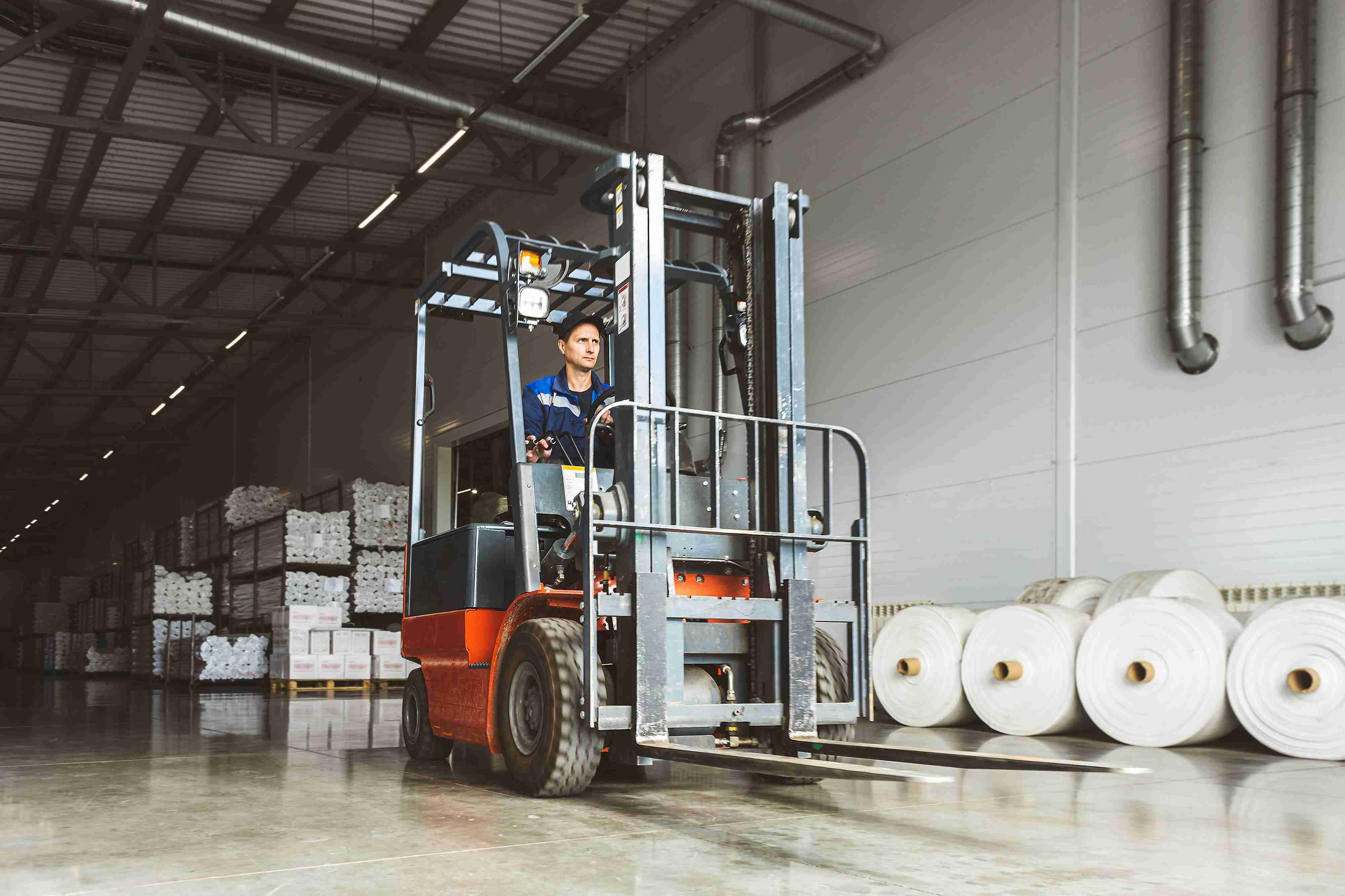
There are two common forklift lease extension options.
The first is a standard extension. This month-to-month arrangement allows you to continue your lease in 30-day increments. It offers a lot of flexibility in terms of duration, but rates may change every month. As a result, this option is often more expensive overall.
Check your lease for the terms of adding more “hours allowed.” Otherwise, overtime could become a serious financial burden. Some lease extensions will not lower residual (buy-out price). Keep that in mind if you’re considering purchasing the unit at the end of the term.
A flex lease is often the better deal, but you must choose the flex lease option when you first set up your lease to be able to take advantage of it.
Flex leases typically offer significantly lower monthly payments and the buy-out price can be considerably lower. Additionally, they also help you avoid financial penalties for exceeding work hour limits.
Most leases limit forklift working hours to 2,000 hours/year. Exceeding that limit normally incurs penalties, but a flex lease extends your lease for a year or more and offers an additional allotment of hours.
Flex leases also lock in monthly rates, protecting you from interest rate spikes.
How To Choose a Forklift Lease Option
Now that you have a handle on the three common lease-end options, it's time to choose the one that's right for you.
Answer these five questions, and the best path will usually become obvious.
- What are the current hours?
- Has downtime increased in the last 6–12 months?
- Has the application changed since you started the lease?
- Is the environment harsh (impacts, corrosion, freezer, dust)?
- Do you want predictable costs or long-term ownership?
Once you’ve answered them, take a look at the quick decision guide below.
Quick Decision Guide
- High hours + uptime is critical: Lean toward a replacement or plan a bridge extension.
- Stable hours + forklift still fits: Explore keeping it.
- Unclear future + timing issues: Plan an extension while you evaluate.
Schedule your Lease-End Check-In
If you’re still uncertain of the best move forward, we can help.
Our team can do a deep dive into your unique situation and lease terms. We’ll map your best next move based on hours, application, and your timeline. Let us help you decide whether to replace it, keep it, or extend it.
To learn more about your forklift lease options, contact us online or visit one of our locations.
Auburn 253-854-5438
Pasco 509-547-7413
Wenatchee 509-663-9009
Yakima 509-457-5137
Further Reading
When Leasing a Forklift Makes Sense
Forklift Purchasing Options: Buy, Lease, or Rent
How to Plan for Your Seasonal Forklift Rental