


by Will Tooker, on February 6, 2026 at 11:50 AM
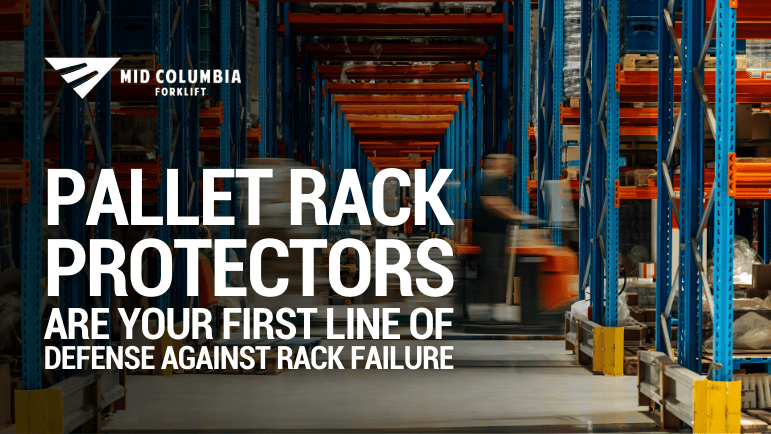
In most warehouses, forklifts and pallet racks are constantly sharing tight spaces.
Even with skilled operators and clear traffic rules, collisions happen. Pragmatic warehouse managers understand and accept that reality. However, the location of those impacts and the accumulated damage are often overlooked.
Consequently, an unprotected rack upright can turn a minor collision into a major disaster.
The good news? Protecting your pallet racks doesn’t require massive upgrades or complex systems. Small, strategic investments guard against the damage you see and the damage you don’t.
Read on to learn why pallet rack protection pays off.
Pallet Racks Take More Abuse Than You Think
Forklift traffic concentrates risk in predictable spots.
The most vulnerable part of your pallet racking isn’t the beams overhead. It’s the bottom few inches of each upright. This is where:
- Forklifts make tight turns
- Pallets are positioned and adjusted
- Forks clip corners, baseplates, and anchors
Over time, even low-speed contact adds up.
What starts as a small dent or shift can silently undermine the entire rack’s integrity.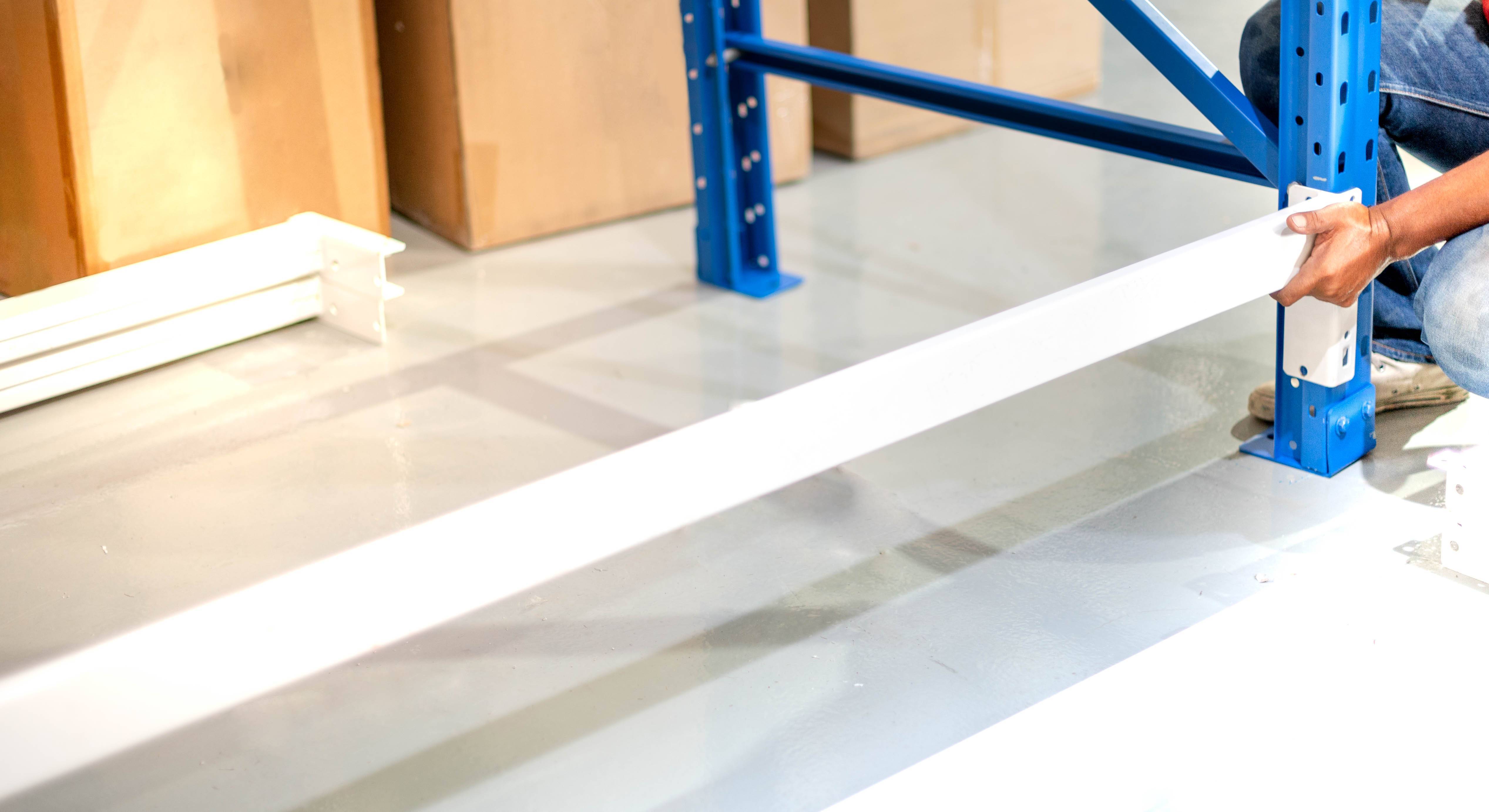
Baseplate and Anchor Damage
Sometimes the most insidious damage lurks beneath your racking.
At the base of every rack upright are two critical components:
- The baseplate, which spreads the rack’s load across the floor
- The anchor bolts, which secure the rack to the concrete
Damage here is especially dangerous because it's easy to miss. A bent baseplate or loosened anchor may not be obvious during day-to-day operations. Still, it can reduce load capacity, cause misalignment, or allow the rack to shift under stress.
In high-traffic aisles, this damage is one of the most common precursors to rack failure.
Forklift Collisions
Most pallet rack damage isn’t caused by poor design or overloading.
It's caused by forklift impacts. In fact, forklifts are responsible for 70% of all rack structural damage. Even careful operators bump racks when visibility is limited, aisles are tight, or workloads increase. Thus, some collisions are unavoidable. So, the best approach is to control where the impact energy goes. That's precisely what quality rack protector designs do.
They take the hit, so your racking doesn’t have to.
Simple Pallet Rack Guards Offer Serious Protection
Protecting pallet racking doesn’t mean childproofing every beam and upright.
Strategically installed warehouse rack protectors dramatically reduce damage, downtime, and long-term repair costs. Even better, these protectors don't require massive infrastructure changes or extended builds.
Three simple additions can make all the difference.
Low-Profile Pallet Rack Guards
Low-profile column guards focus protection exactly where most damage occurs: the bottom of the rack upright.
These guards come in two general varieties:
- 4-inch column guards. These are ideal for tight layouts where aisle clearance matters. They protect the most vulnerable zones while occupying minimal floor space.
- 6-inch base guards. These provide more coverage without interfering with beam placement.
Both options help preserve baseplates, anchors, and upright alignment.
Consequently, these often prevent damage that might otherwise require rack replacement.
Upright Protectors for In-Aisle Protection
For in-aisle uprights, freestanding upright protectors are one of the most effective defenses.
These frame protectors bolt directly to the floor rather than to the upright. The gap allows them to absorb impact energy before it reaches the rack. Additionally, they are easy to replace and cost little compared to rack repairs.
Upright protectors are an easy, cost-effective way to protect high-risk uprights.
End-of-Aisle Guards and Guard Rails
Rack ends are frequent collision points, especially in busy warehouses with intersecting traffic.
This makes them important areas to protect. To accomplish this, most operations choose one of two options:
- End-of-aisle guards. These shield exposed uprights and absorb higher-energy impacts.
- Guard rails. These are semi-permanent barriers that guide traffic while preventing accidental collisions.
Installed strategically, these solutions reduce damage to your highest risk impact sites.
Product Selection and Installation Matter
Not all rack guards offer the same protection.
Improperly placed or poorly installed guards cause all kinds of problems. They limit beam placement, reduce usable space, or fail to absorb impact effectively. To avoid these pitfalls, we supply and install rack protection products that:
- Match your rack configuration and forklift traffic patterns
- Protect critical impact zones without reducing usable space
- Are installed correctly to perform as intended
The result is protection that works with your operation rather than against it.
Forklift collisions are inevitable, but rack damage and safety risks don't have to be. With the right protection, you can defend your racking against both the impacts you expect and the ones you don't.
To learn more about practical, cost-effective rack protection solutions, contact us online or visit one of our locations.
Auburn 253-854-5438
Pasco 509-547-7413
Wenatchee 509-663-9009
Yakima 509-457-5137
Further Reading
Damaged Warehouse Racking Could Topple Your Business
Should I Repair or Replace My Warehouse Racking?
Types of Pallet Racking Configurations For Your Washington State Warehouse