


by Will Tooker, on January 13, 2026 at 7:18 AM
While a single failure in your warehouse racking can cost your company millions, the paramount concern is the risk to your team's safety.
Pallet rack failures account for 5-10% of all warehouse accidents. While racking failures have fallen out of OSHA's top ten warehouse accidents in recent years, they remain high on OSHA's list of warehouse hazards. Additionally, rack failures are expensive, costing the industry approximately $36 billion annually in associated damages and injuries.
Those are staggering numbers, but they are all preventable in your facility.
Pallet rack inspections are your first line of defense against catastrophic failures. Staying on top of the condition of your pallet racks can save lives, prevent inventory loss, and protect you from enormous fines.
Read on to learn:
- How pallet rack damage occurs
- What signs to look for to prevent pallet rack failure
- Why pallet rack inspections are critical
- How to take the guesswork out of pallet rack safety
How Pallet Rack Damage Occurs
There are four primary sources of pallet rack damage, each harder to spot than the last.
1. Accidental Impacts
Accidental impacts, such as forklift collisions, account for around 90% of all pallet rack damage.
Consequently, this type of damage is often at the forefront of rack safety discussions. Forklifts and other heavy machinery have more than enough mass to deform rack uprights or beams during an impact.
The best way to prevent this damage is to use care when operating forklifts near racking.
However, the sheer volume of forklift operations around racking makes 100% prevention statistically impossible. So, when an impact does occur, a safety inspection is vital to ensure the structural integrity isn’t compromised.
These inspections and subsequent warehouse racking repairs are best handled by a trained professional.
2. Improper Loads
Overloading racks and uneven loading put excessive strain on racking systems.
Every beam has a load capacity rating. These ratings represent the maximum capacity a beam can withstand, determined by numerous factors including length, design, and construction material. Overloading a beam may cause it to fail, dumping heavy pallets onto anything or anyone below.
Additionally, rack system designs rely on sharing load weights between multiple uprights.
When unevenly loaded, one upright bears more weight than the others. This can lead to damage, such as twisting or buckling. These deformations are a ticking time bomb. Unaddressed, they can eventually lead to failures or cause immediate collapse.
Either way, they put your whole facility at risk.
3. Corrosion
Corrosion and rust are a rot that eats away at the integrity of your rack components.
Humidity and dampness are significant sources of this type of damage. However, chemical exposure is a less obvious but equally dangerous source. Chemicals such as acids, strong bases, and chlorides found in bleach and other industrial chemicals can corrode steel, making spills a hazard to both staff and infrastructure.
Corrosion-resistant finishes are your best defense.
Powder coating and galvanization provide the best protection as they chemically bond with the steel. Standard paint is insufficient as it wears off over time, leaving the underlying metal exposed. When powder coating and galvanization are unavailable, look for stainless steel or zinc-plated components.
Regardless of coating or treatment, rust and corrosion can still occur, making regular inspections critical to rack safety.
4. Upright Hole Damage
Damage to the column holes is one of the most commonly missed sources of rack damage.
When a rack is improperly loaded or suffers an impact, it's easy to focus on the uprights and beams. However, the upright holes themselves may be damaged during such incidents, rendering them unsafe. Never reuse damaged column holes.
Using a professional inspector ensures this subtle but serious type of damage doesn’t go unnoticed.
Signs of Impending Pallet Rack Failure
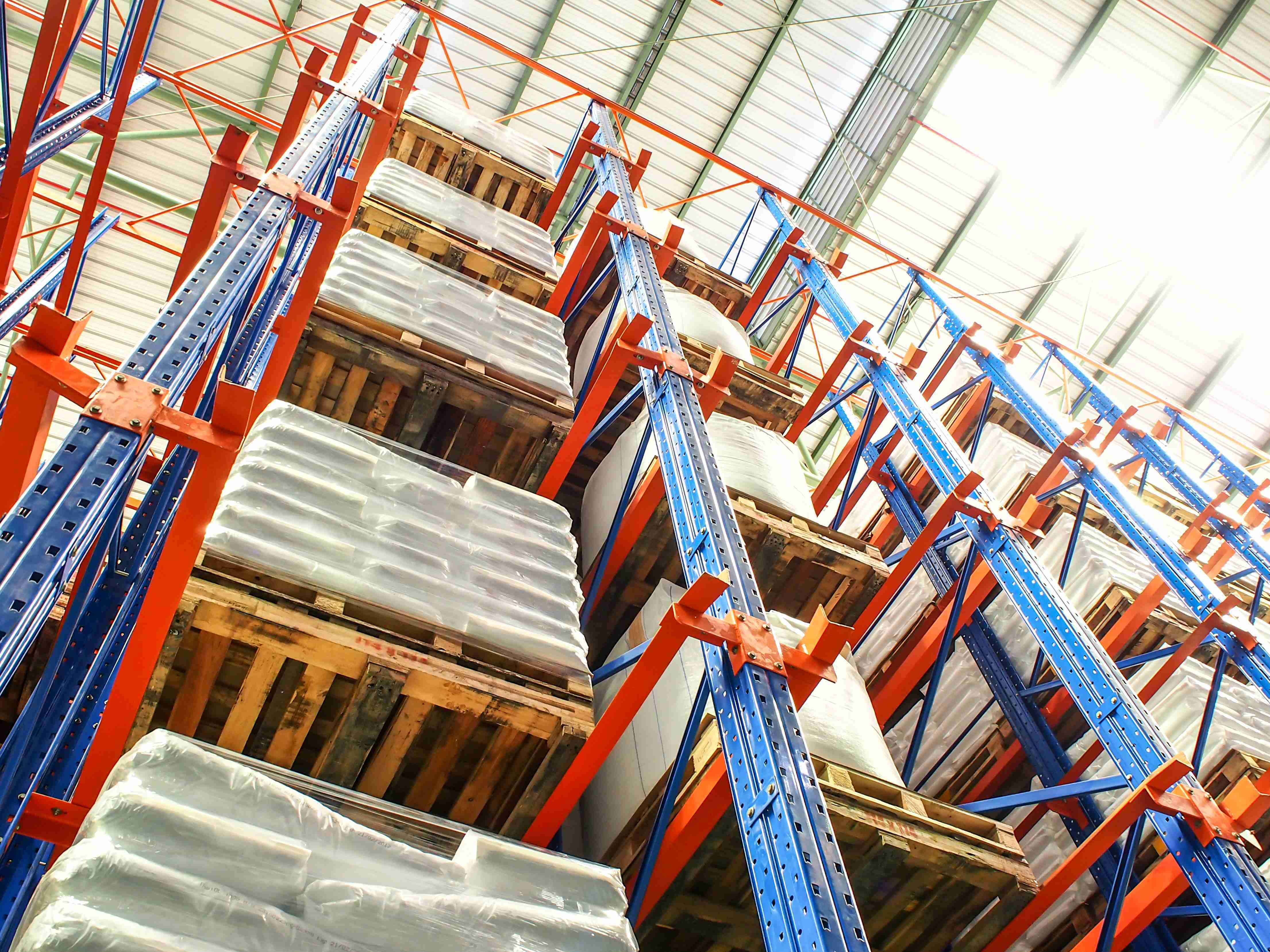
It isn’t feasible to have your racks professionally inspected every day, but that doesn’t mean you shouldn’t make the rounds yourself.
Here are seven indications that your pallet racking is no longer safe:
- Unsecured beams. Crooked racks. If your racks aren’t level or lean to one side, they aren’t structurally sound. Crooked racks are the same as unevenly loaded racks. They put excess stress on one side, leading to failures.
- Damaged uprights or braces. Dings, dents, bends, twists, and other deformations are all signs of a compromised rack. If you notice any of these, you should unload the rack and remove it from service until a trained professional declares it safe.
- Unsecured beams. Regardless of configuration, racking systems depend on beams secured to uprights via a locking mechanism. An unsecured beam is an accident waiting to happen. Unload unsecured beams and place them out of service until properly locked.
- Beam bowing. Metal is malleable. Consequently, beams will bow slightly when loaded. However, this bowing should never exceed 1/180th of the beam length (or more than a quarter inch for a 96-inch beam). If you notice greater deflection than this, there's a problem with your racking. Furthermore, a bow exceeding a half-inch on a standard 96-inch beam indicates a near-term collapse.
- Unattached footplates. Footplates must be bolted to the floor. If a foot plate is unsecure, the upright can shift, compromising the rack’s structural integrity.
- Corrosion. Inspect racks for rust and corrosion. Significant corrosion is a serious hazard. So, small spots are best dealt with early before they become a liability.
- Damaged protectors. Various racking protectors are available and are a great way to reduce collision damage. However, if you notice a damaged protector, an impact likely occurred. Inspect the associated rack for damage before returning it to service.
Obviously, this is not a comprehensive list of rack damage. There are many other indicators, but these seven are signs of an impending, critical issue.
Routine in-house inspections will help you spot damage before it becomes a problem, but they don’t replace regular professional inspections.
The Importance of Regular Pallet Rack Inspections
Think of your pallet rack like a Jenga tower.
Every dent, spot of corrosion, and sheared bolt is a block removed from the tower. Left too long, pallet rack damage will stack up, and your racks will fail, putting your staff, products, and revenue at risk. Inspections help you identify damage before it creates a critical issue.
Pallet racking repair can prevent calamity, but only if you know there’s a problem.
When you identify damage early and seek repair, you put blocks back in your Jenga tower. This protects the structural integrity of your racking, saving you thousands and protecting your associates.
The cost of a professional inspection pales in comparison to the injury and OSHA fines caused by a collapse.
Take the Guesswork Out of Pallet Rack Safety
Whether you are trying to prevent a collapse or recovering from a racking failure, call the professionals.
In the wake of a failure, there is nothing you can do but unload the rack and tag it out. Everything else requires a professional inspection to identify the source of the failure, followed by repair or replacement conducted by an experienced team. Without this help, you’re only setting yourself up for future failure.
Don’t wait to learn the value of inspections the hard way.
The experts at Mid Columbia Forklift have decades of experience with pallet rack installation, inspection, and repair. We know all the subtle signs of impending failure and can advise you on how to prevent a collapse. With our help, you don’t have to wait until disaster strikes. Don’t let your warehouse become another safety statistic. Let us take the guesswork out of pallet rack safety.
To learn more about pallet rack inspections or repair, contact us online or visit one of our locations.
Auburn 253-854-5438
Pasco 509-547-7413
Wenatchee 509-663-9009
Yakima 509-457-5137
Further Reading
Should I Repair or Replace My Warehouse Racking?
Is My Warehouse Racking Compliant with Washington State Fire Codes?
The Best Pallet Racking Solutions for Your Warehouse