


by Luis Castaneda, on October 2, 2026 at 5:56 AM
Challenge: Twelve-foot aisles. One forklift. A literal butt-load* of wine.
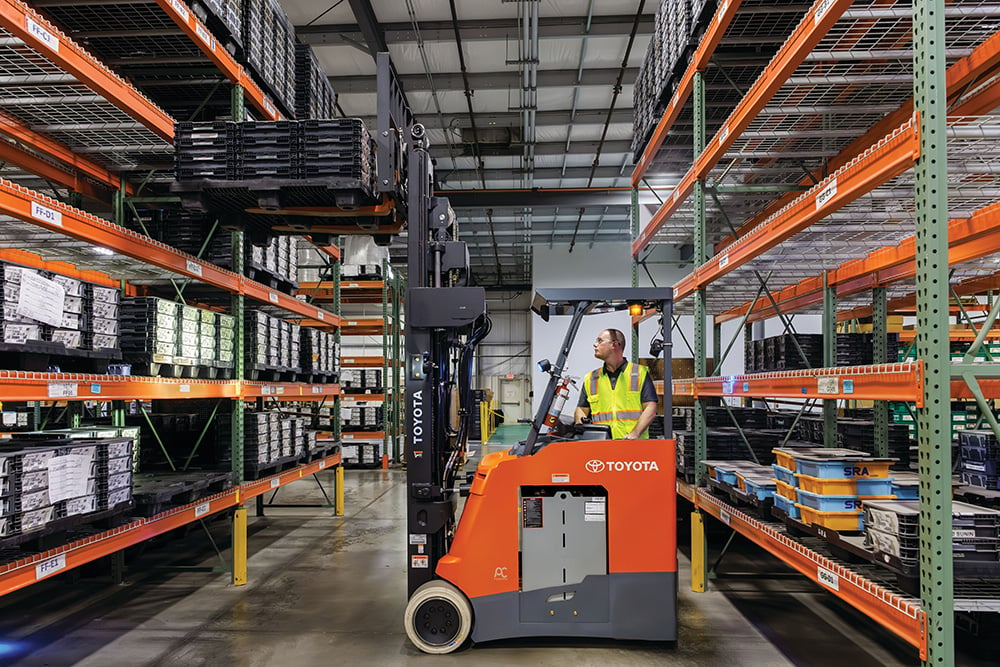
It’s not the latest cozy gaming craze or a fetch quest posed by the system AI. It’s the real-life challenge one local winery faced. They wanted to maximize warehouse storage space. So, they reduced aisle widths to less than twelve feet. However, their current forklift couldn’t navigate those tight spaces. That presented a challenge: Either use one forklift for loading trailers and another for stocking racks, or invest in a forklift that could do both.
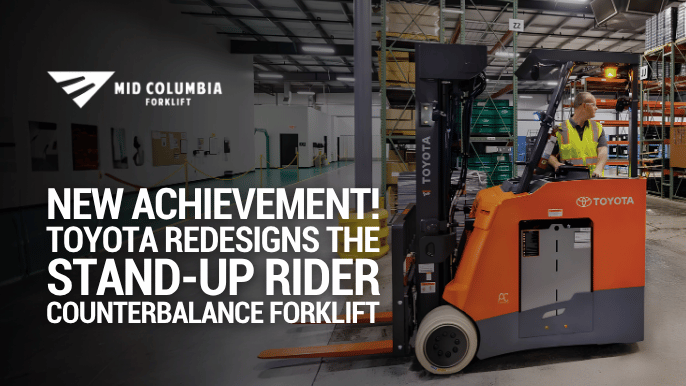
Toyota’s redesigned Stand-Up Rider Forklift was the solution.
The recent redesign features numerous upgrades that made this forklift ideal for their process. By investing in the Stand-Up Rider, the winery gained a forklift that could handle loads from dock to stock. This eliminated the need to swap forklifts, keeping operations efficient and lean.
Many Washington operations face the same challenge as this local winery.
You want to maximize storage space, but you need a narrow aisle forklift that can do the work of a conventional forklift. That dock-to-stock mentality fueled the Stand-Up Rider’s redesign, causing Toyota to update their fan-favorite forklift to meet the evolving needs of the modern warehouse.
Read on to learn what’s new with the Toyota Stand-Up Rider’s redesign.
*Fun fact: The term butt-load comes from the wine industry, where one butt equals about 126 gallons.
Productivity Upgrades
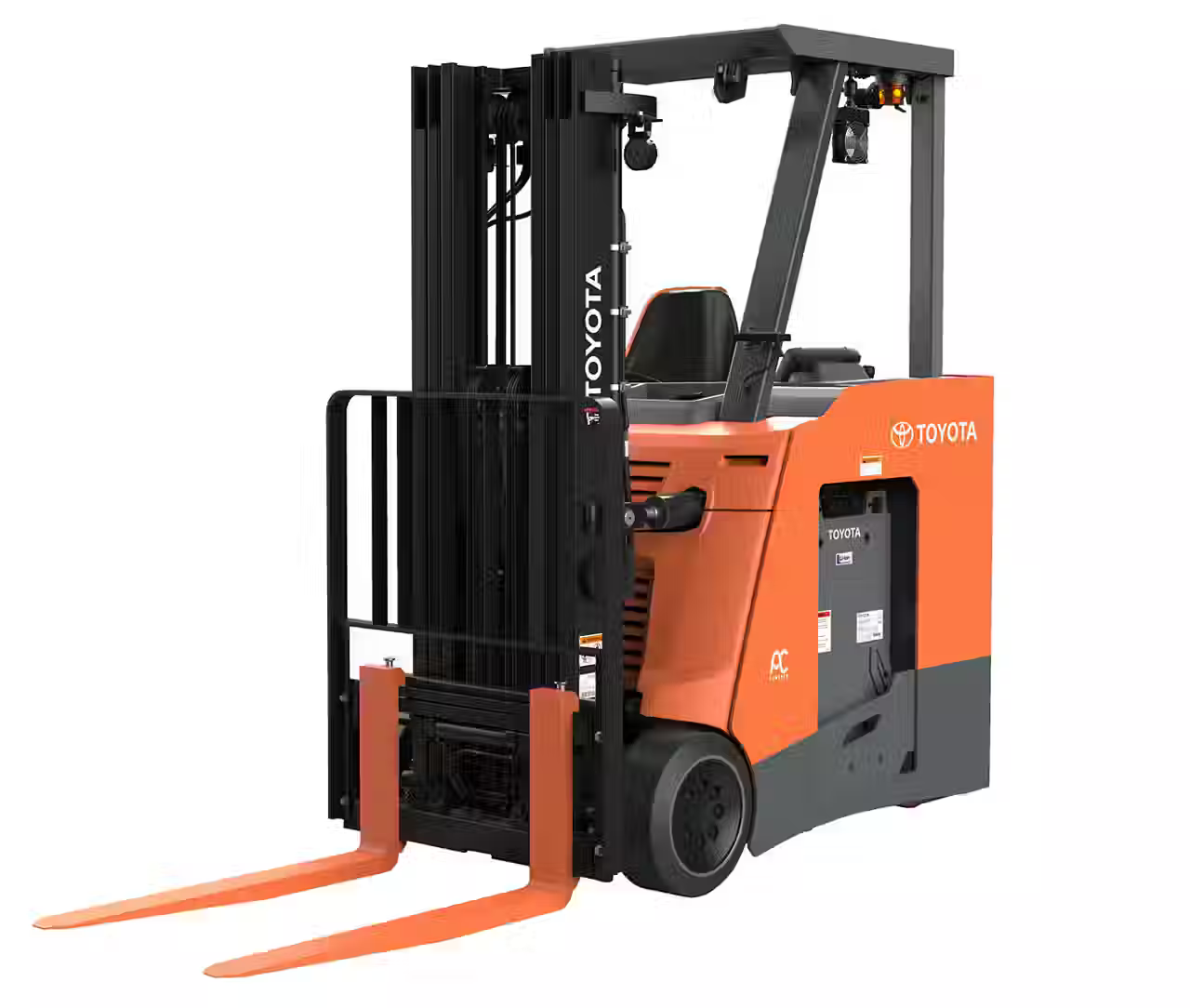
Toyota’s upgrades touch nearly all of the Stand-Up Rider’s systems.
These improvements universally enhance the forklift’s mission-critical performance requirements. The new-and-improved electric power steering system provides better operator control, making the lift more nimble.
Toyota also increased lift and lower speeds. This upgrade increases productivity by letting operators load and unload stock more quickly without sacrificing safety.
However, Toyota did not alter travel speed. This was a deliberate choice to help maintain safe driving practices.
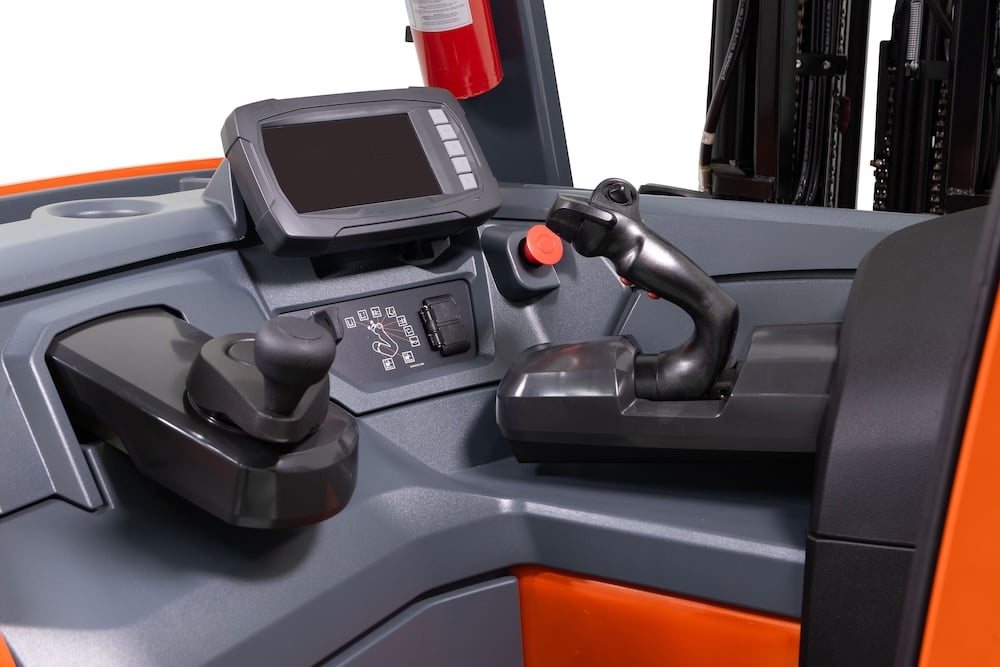
Finally, the redesigned Stand-Up Rider features a seven-inch touchscreen display. The display puts vital information at the operator’s fingertips, such as:
- Load weight
- Tilt angle
- Lift height
- Diagnostics
- Performance data
This information helps the operator complete tasks quickly, efficiently, and safely.
In the right application, Toyota’s Stand-Up Rider could be the only forklift you need.
Enhanced Ergonomics
A hard-working forklift shouldn’t be hard on the operator.
With that belief, Toyota engineers added ergonomic improvements to the new design. The comfort ride suspension already featured an adaptive floor system to minimize vibration. So the redesign team built on that foundation.
They started by reorganizing cabin components to create more usable space, giving the operator more room to breathe. Then, they upgraded visibility. The redesign offers better views of the forks and tires, improving the operator’s spatial awareness.
Last but not least, they added comfort features like an adjustable tiller and armrests.
Onboard Insights
If you’ve kept up with industry trends, you’ve probably noticed the increased focus on data collection.
Forklift telematics is a vital feature for lean operations seeking real growth over guesswork. To meet that emerging need, Toyota built its MyInsights telematics system directly into the redesigned Stand-Up Rider.
Now, managers can track operating data, monitor impacts, and identify maintenance needs in one easy-to-use platform.
Power Options
While Lithium-ion batteries have not replaced lead acid, they continue to grow in popularity.
With the redesign, Toyota’s engineers saw an opportunity to offer operators more flexibility in their power options. They designed an optional lithium-ion battery specifically for the Stand-Up Rider.
Designing the battery in tandem with the forklift’s redesign ensured consistent performance, simplified service, and integrated diagnostics with the onboard telematics.
Additionally, this single-source solution streamlines purchase and ownership.
Level Up Your Warehouse
Finally, Toyota leaned into their commitment to flexibility by creating three optional packages.
The comfort package further improves ergonomics. The performance package offers more speed and control. The technology package is for operations that want the most data available. By mixing and matching these packages, you can create a Stand-Up Rider that fits your application.
Adaptable solutions like the redesigned Stand-Up Rider are like loot drops. They help you level up your operation faster than the daily grind alone. Yet, discovering the best build-out for your workflow requires a guide.
That’s what we do best.
Our experts have all the insider knowledge you need to find the forklifts and warehouse solutions that will keep you winning. Don’t let outdated gear hold you back. Reach out to discover what upgrades might be right for you.
To learn more about the Toyota Stand-Up Rider Forklift, contact us online or visit one of our locations.
Auburn 253-854-5438
Pasco 509-547-7413
Wenatchee 509-663-9009
Yakima 509-457-5137
Further Reading
Still Dominating: Why Lead Acid Batteries Remain the Backbone of Forklift Power
The Ergonomic Benefits of Stand-Up Forklifts
Toyota Forklifts Now Include Telematics